Co-Author. Dr. Nesreen Barwari

Women peacebuilders inevitably face risks and insecurity in their daily work. International partners have an important role to play in supporting their safety and protection. Understanding women peacebuilders’ roles and the types of risks they face is the first step in ensuring an adequate response. The diversity of roles that women peacebuilders play, as well as the multiple factors that impact the types of risks they might face, need to be taken into account by international partners from the very beginning of a partnership.

Building Holistic Security: Addressing Security Risks of Women Peacebuilders Through Partnerships addresses how international partners who wish to work with women peacebuilders and support them in addressing the risks and insecurity they face need to recognize the scope and nature of peacebuilding work, which is often cross-cutting, overlapping with humanitarian response and development work. Understanding the nuances and breadth of women peacebuilders’ work is crucial to identifying the risks they face and providing them with effective legal, political and financial protection — and is thereby essential to creating partnerships that mitigate and address these risks. Through case studies, the report identifies challenges and opportunities drawn directly from the lived realities of women peacebuilders and their partners, as well as from experts working in the Women, Peace and Security field.

Since 2002, the Kroc IPJ has hosted the Women PeaceMakers Fellowship program. The Fellowship offers a unique opportunity for women peacebuilders to engage in a cycle of learning, practice, research and participation that strengthens peacebuilding partnerships. The Women PeaceMakers Fellowship facilitates impactful collaborations between women peacebuilders from conflict-affected communities and international partner organizations. The Fellows also co-create research intended to shape the peacebuilding field and highlight good practices for peacebuilding design and implementation.
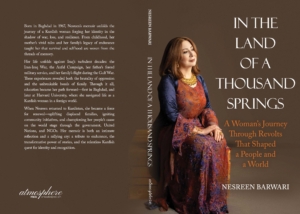
By Dr. Nesreen Barwari, Ain Shams Engineering Journal Volume 13, Issue 4, June 2022, 101706.

The conditions of the settlements are often very poor with deficiencies in basic supplies like water. This study aims to: (i) assess the sanitation service level for Internally Displaced People (IDPs) and refugee camps in Duhok province / Kurdistan of Iraq (ii) assess the performance of wastewater treatment plants (WWTPs) and offer different scenarios to improve the sanitation service level in the Duhok province (iii) propose various decentralized treatment approaches. To demonstrate the efficiency of WWTPs, samples of generated wastewater at the effluent of 12 residential projects were collected to conduct the COD test.

The results of COD test were found to exceed the permissible level of 100 mg/L set by Iraqi wastewater standard except in New Zakho and Avro city projects. The highest generation rates of grey and black wastewater were in Chamishko and Kaberto1 IDP camps and were 1013 and 3000 m3/day respectively.

Both Avro city and War city residential complexes were notably discharging the highest rates of wastewater at the effluent with 5610 and 2484 m3/day respectively. Lelav city, New Jin city, and Dabin projects were found to have the maximum organic loading rate of COD with 745, 578, and 332 kg/day respectively. This study proposed Waste Stabilization Pond (WSP) systems to be constructed in both Domiz1 refugee camp and Chameshko IDP camp. In order to be more achievable, it is suggested that the regulations of disposed wastewater at the effluent be amended and categorized on a class basis rather than using a single effluent number.

Report commissioned by the Permanent Mission of the United Arab Emirates to the UN written by Georgetown Institute for Women, Peace, and security (GIWPS) 2020. Contributor.

H.E. Geraldine Byrne Nason, Ambassador and Permanent
Representative of Ireland to the United Nations

This year, the international community marked three major milestones in its collective journey towards achieving gender equality and women’s empowerment: the twentieth anniversary of the adoption of the UN Security Council resolution 1325
(UNSCR1325); the twenty-fifth anniversary of the adoption of the Beijing Declaration and the Platform for Action; and the launch of the Decade of Action to deliver the 17 Global Goals. As we stand at this crossroads, we are reminded that more needs to be done to fully realize the Women, Peace and Security (WPS) agenda and ensure the full, meaningful participation of women and girls across all settings.

Musleh Duhoky, Nesreen Mustafa Sideek Barwari, Jian Hassanpour. Vol. 23 No. 2 (2020): Section: Pure and Engineering Sciences.

This article focuses on building a resilient sector based on a unified approach for a comprehensive social, economic, and environmentally viable water and sanitation sector development for Duhok Governorate.

The article highlights the challenges of meeting the growing water demand, the impact of water scarcity, the changing geo-political scenarios, the sanitation policy of Duhok, and the need to prepare for a water-secure future for all citizens and residents of Duhok Governorate.

To achieve an integrated approach to managing water resources and sustainable water and sanitation services in light of future sector imperatives, there is a need to protect our water resources while ensuring equitable and efficient water allocations to meet all social and economic development needs, with secured wastewater/sanitation services for our populations.

Furthermore, there is a need to revise the institutional and legal frameworks to streamline sector management and administration. The management and protection of water is a shared responsibility among various government sectors, municipalities, businesses, industry, and individuals. Residents need to be aware of how much water they use, practice water conservation, and respect the environment.

Water and sanitation management could include developing a better understanding of water resources and using this information to support sustainable economic development; implementing improved long-term management developed through the joint work of all stakeholders; and evaluating opportunities to share more information with the public.

By Dr. Nesreen Barwari. 2018.

More than three years after the occupation of large parts of Iraqi territory by ISIL, over 1.7 million have returned to their places of origin as Iraqi forces and Kurdish Peshmerga retook areas. However, more than 3 million Iraqis remain displaced.

Duhok, a governorate with a population of 1.5 million, today hosts more than 750,000 refugees and IDPs. 30 percent of them are living in 27 camps and the rest are living among the hosting community across the governorate. Out of 5,235 dunams (1,309 ha) of land allocated by the Duhok governorate for establishing 27 IDPs and refugee camps, 3,765 dunams (941 ha) is agricultural land rented from farmers and landlords. Annually the government pays $1.75 million to the landowners. Until the end of 2017, the government had spent $24 million on camp construction.

By Dr. Nesreen Barwari. 2018.

Structural issues and recent multiple crises

As with the rest of Iraq, the KRI economy is characterised by four severe weaknesses:

  1. High dependency on the oil sector. The KRI’s economy is highly dependent on oil that has enabled rapid economic development. Though suspended in 2014, constitutionally-mandated oil revenues from Baghdad constituted about 85 percent of the KRG’s revenue. The sector, however, is only estimated to have a 1 percent share of the region’s employment. High oil dependency has enabled a rentier state.
  2. Excessive role of the public sector. The public sector dominates the KRI economy. The KRG is the main employer with over 50% of total employment, 26% non-military. As in the rest of Iraq, payments for salaries, pensions, social assistance, and subsidies (electricity, fuel, water, and health and education services) consume over 50% of the budget. Taxes are only about 5% of total revenue. At this stage, public expenditure remains a primary driver of economic growth. Despite the strong entrepreneurial spirit, the greatly expanded KRI private sector still has a long way to go to meet its potential.
  3. Dependency on imports. Due to the relatively undiversified Iraqi economy, aside from oil exports, there is a huge gap between the demand for locally produced food and other products and the consumption of imports, a typical feature of a rentier economy. Virtually everything is readily available in the Region. Under the current policy regime, it is hard for local businesses to diversify and grow vis-à-vis imports.
  4. Weak financial system and dependency on a cash-based economy.

These structural challenges have been aggravated by a series of recent shocks:

  • A conflict with ISIS from mid-2014 that reached to within 20 km of Erbil.
  • A rapid population increase of 28% as a result of the influx of 2 million displaced people from the rest of Iraq and Syria.
  • The sharp decline in international oil prices, from $115 per barrel in June 2014 to about $45 in 2017.
  • The suspension of revenue transfers from the national government, from $12 billion in 2013 to about $1 billion in 2014, to zero in 2015.

An essay in the booklet: “Kurdistan Regional Government: Twenty-five years of hope, challenges and progress”. Publication. Sep 2017.

The booklet “Kurdistan Regional Government: Twenty-five years of hope, challenges and progress,” published in September 2017 and containing the essay “The Kurdistan Region of Iraq: From Tragedy and Trauma to Urban Development,” does not appear to be readily available through public online sources in its full text. To access the essay, consider contacting the Kurdistan Regional Government (KRG) directly or checking with university libraries or research institutions.

Cities to be newsletter. 2017.

The world we live in is bringing a picture of global dilemmas when we try to discern between challenges, risks and opportunities. Most of the issues that are considered global challenges transcend national boundaries and cannot be resolved by any one country acting alone. What is the role of cities when tackling global challenges? How can we turn words into action?

This article offers an overview of the role of cities in this scenario by five of the most relevant global challenges from the perspective of international experts: Priya Prakash, designer and founder of D4SC and Changify, gives her insight in the citizen participation field, Jordi Julià, member or the Transport Committee and Chairman of the Urban Planning Committee, participates as an expert in mobility, Dr. Nesreen Barwari, Professor of Urban Planning and Governance, Duhok-Iraq and Former Minister in Kurdistan and Iraqi Governments, offers the perspective of migration, Gonzalo Fanjul, Director of ISGlobal, shares his expertise in health, and Luigi Carafa, Executive Director at Climate Infrastructure Partnership, as an expert in climate change.

Test

Test