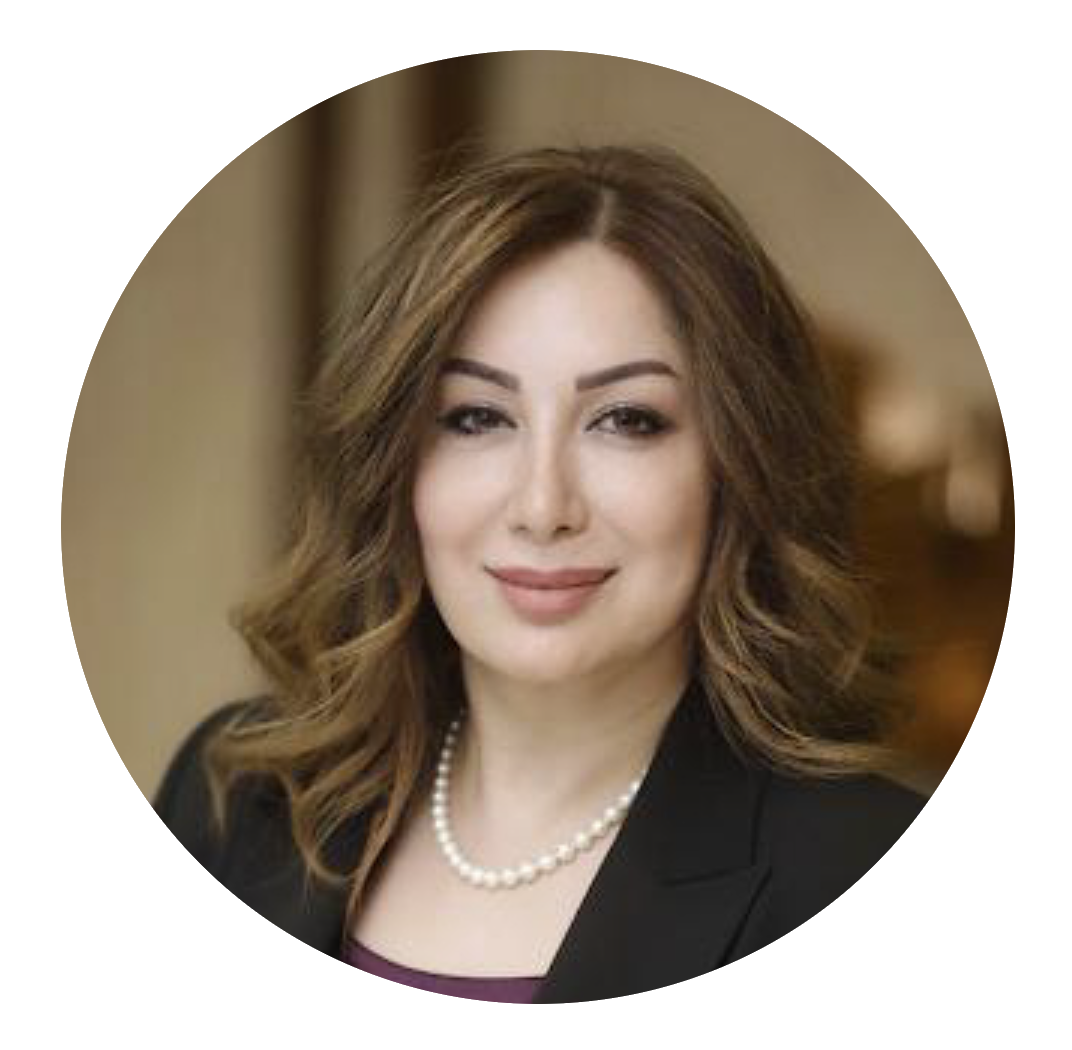
What does it take to build peace in a region shaped by decades of conflict and displacement? In this episode, Dr. Amina Rasul-Bernardo sits down with Dr. Nesreen Barwari, Kurdish-Iraqi leader, academic, and public policy expert, to talk about how women’s empowerment and inclusive governance are at the heart of lasting stability. From the personal cost of displacement to the political mechanics of quotas and decentralization, Dr. Barwari brings both lived experience and policy expertise to the conversation. A compelling listen for anyone who believes peace is built from the ground up.

🎧 Tune in to She Talks Peace for real stories of peacebuilders, changemakers, and everyday heroes across Asia and beyond.

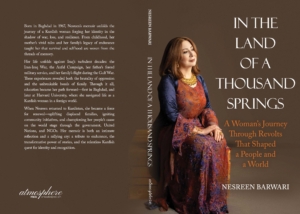
Discover Dr. Nesreen Barwari’s Memoir: In the Land of a Thousand Springs, available on Amazon : https://a.co/d/0bRdofr6

Disclaimer: This podcast was produced with the financial support of the European Union. Its contents are the sole responsibility of PCID and do not necessarily reflect the views of the European Union.

Iraq today stands at a defining political moment. More than two decades after the fall of Saddam Hussein and years after the territorial defeat of ISIS, the country continues to wrestle with a deeper and more enduring challenge: the unresolved question of what kind of state Iraq aspires to become. Beneath debates over budgets, elections, oil revenues, and regional power dynamics lies a more fundamental struggle over governance, citizenship, and the relationship between the state and society.

Recent political developments—particularly the growing pressure on women’s rights, restrictions on civic space, and attempts to reshape legal frameworks governing family and personal status—are not isolated incidents. They are symptoms of a broader institutional fragility that continues to define the Iraqi political landscape. They also reveal the tension between two competing trajectories: one that seeks a more inclusive, rights-based state grounded in accountable governance, and another that prioritizes political expediency, sectarian bargaining, and social control over long-term national development.

Iraq at a Crossroads: State Fragility, Women’s Rights, and the Future of GovernanceThewoman.uk

For many Iraqis, these debates are not abstract policy discussions. They are lived realities shaped by decades of conflict, displacement, authoritarianism, and reconstruction. The Iraqi state has repeatedly struggled to establish legitimacy in the eyes of its citizens. Trust in public institutions remains weak, not only because of corruption or inefficiency, but because many Iraqis continue to feel excluded from political decision-making and disconnected from the promises of citizenship itself.

This crisis of legitimacy has become increasingly visible in recent years. The 2019 Oct protests exposed the depth of public frustration with political elites and governance structures that many viewed as unresponsive and self-preserving. Young Iraqis demanded more than economic reform; they demanded dignity, accountability, and a state capable of serving its people rather than competing factions. Although the protests were violently suppressed, the grievances that fueled them remain unresolved.

At the same time, Iraq’s political system continues to operate within a framework shaped by competing centers of power, weak institutional consolidation, and persistent external influence. Successive governments have struggled to balance reform rhetoric with entrenched political interests. While the current administration has emphasized stability, infrastructure, and economic investment, meaningful institutional reform remains slow, particularly in areas related to judicial independence, anti-corruption efforts, and the protection of civil liberties.

The debate surrounding amendments to Iraq’s personal status law has become one of the clearest examples of this broader political struggle. Critics argue that efforts to lower the legal age of marriage and expand sectarian influence over family law represent a dangerous regression in women’s rights and legal protections. Supporters frame these proposals as matters of religious or cultural authenticity. Yet the implications extend far beyond social conservatism. These legal shifts raise fundamental questions about the nature of the Iraqi state itself: whether citizenship rights will remain universal and constitutionally protected, or increasingly subject to fragmented interpretations shaped by political and sectarian interests.

The consequences are not merely symbolic. Early marriage directly affects girls’ access to education, economic participation, and long-term social mobility. In a country already facing high youth unemployment, economic dependency, and demographic pressures, limiting opportunities for young women undermines Iraq’s future human capital and economic resilience. Countries that invest in girls’ education and workforce participation consistently experience stronger development outcomes, greater social stability, and improved public health indicators. Iraq cannot afford policies that move in the opposite direction.

Equally concerning is the deteriorating environment for activists, journalists, and civil society actors. The assassinations and intimidation campaigns targeting women’s rights advocates and reform voices have reinforced a climate of fear that constrains public participation. These incidents reveal persistent weaknesses in accountability and the rule of law. When violence against activists occurs without credible investigations or prosecutions, the state risks signaling tolerance for political intimidation and shrinking civic space.

Yet despite these pressures, Iraqi civil society remains remarkably resilient. Women continue to lead advocacy efforts, organize communities, and participate in public life despite mounting risks. Young Iraqis continue to push for reform, transparency, and institutional accountability. This persistence reflects an important reality often overlooked in international discussions about Iraq: the country’s future is not defined solely by political elites or armed actors, but also by an emerging generation increasingly unwilling to accept governance based on fear, exclusion, or patronage.

The Kurdistan Region offers a parallel but equally important dimension to this conversation. While the region has often positioned itself as comparatively stable and reform-oriented, it too faces growing public demands for institutional modernization, transparency, and stronger governance mechanisms. Economic pressures, public sector dependency, and debates around political reform have intensified calls for more effective state institutions capable of delivering services and rebuilding public trust. Across both Baghdad and Erbil, the central challenge remains the same: how to transition from systems built around crisis management and political survival toward systems rooted in institutional credibility and citizen-centered governance.

International actors also face a delicate balancing act in Iraq. Stability remains a priority for regional and global powers, particularly given Iraq’s strategic importance and ongoing security concerns. However, an overemphasis on short-term stability without corresponding investment in institutional reform risks reinforcing the very fragilities that threaten long-term peace. Supporting civil society, strengthening rule-of-law institutions, and integrating human rights benchmarks into international partnerships are not secondary concerns; they are essential components of sustainable state-building.

Ultimately, Iraq’s future will depend on whether its political leadership can move beyond transactional politics and begin addressing the structural causes of public distrust. Governance cannot rely indefinitely on patronage networks, sectarian compromise, or security-based legitimacy alone. Durable stability requires institutions that citizens believe in and laws that protect rights consistently rather than selectively.

The debate over women’s rights, civic freedoms, and legal reform is therefore not separate from the question of Iraq’s future statehood—it is central to it. The treatment of women, activists, and marginalized communities often serves as the clearest indicator of institutional health and democratic maturity. States that silence dissent and restrict rights may preserve temporary political control, but they rarely build lasting legitimacy.

Iraq today remains suspended between fragility and possibility. Its political system is under pressure, yet its society continues to demonstrate resilience, ambition, and a desire for reform. Whether the country moves toward greater inclusion and institutional accountability or deeper fragmentation and regression will shape not only the future of governance, but the future of Iraqi citizenship itself.

Dr. Nesreen Barwari

the former lraqi Minister of Municipalities and Public Works.

> Source: https://thewoman.uk/five-inconvenient-truth-why-you-cant-master-photography/
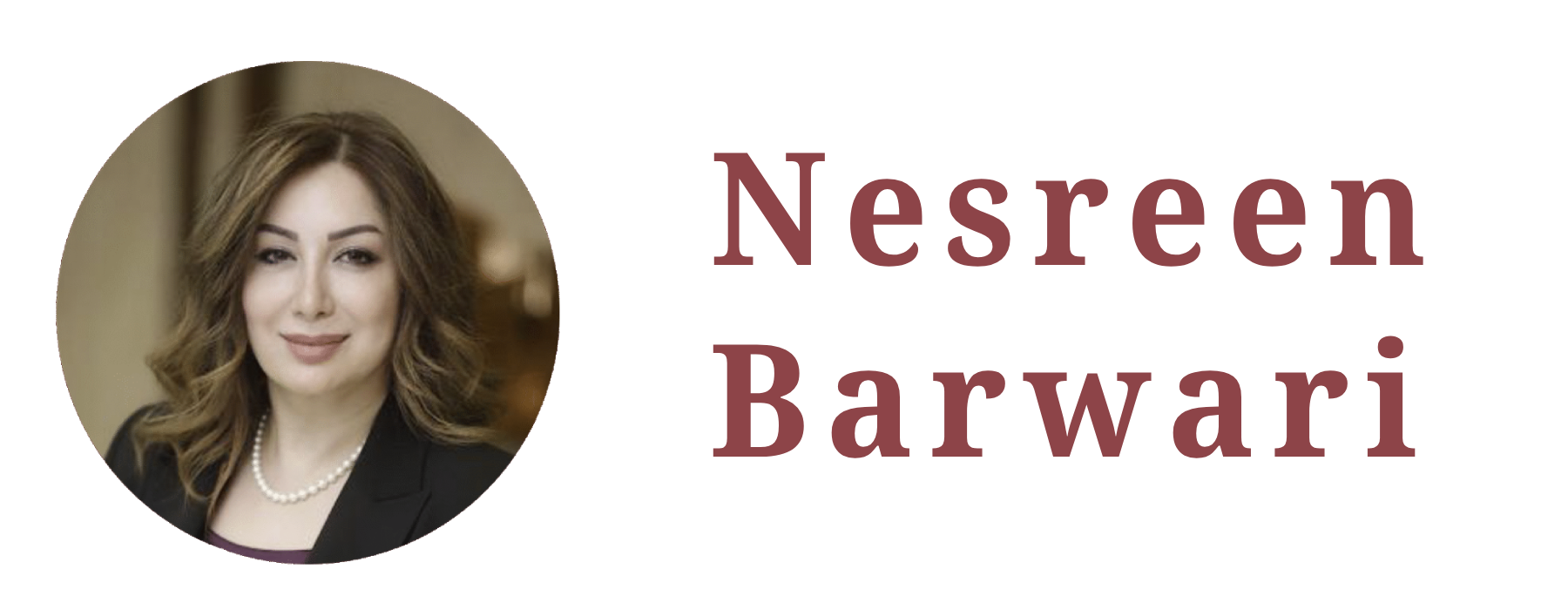
Dr. Nesreen Barwari

13 May 2026

Iraq today stands at a defining political moment. More than two decades after the fall of Saddam Hussein and years after the territorial defeat of داعش, the country continues to wrestle with a deeper and more enduring challenge: the unresolved question of what kind of state Iraq aspires to become. Beneath debates over budgets, elections, oil revenues, and regional power dynamics lies a more fundamental struggle over governance, citizenship, and the relationship between the state and society.

Recent political developments—particularly the growing pressure on women’s rights, restrictions on civic space, and attempts to reshape legal frameworks governing family and personal status—are not isolated incidents. They are symptoms of a broader institutional fragility that continues to define the Iraqi political landscape. They also reveal the tension between two competing trajectories: one that seeks a more inclusive, rights-based state grounded in accountable governance, and another that prioritizes political expediency, sectarian bargaining, and social control over long-term national development.

For many Iraqis, these debates are not abstract policy discussions. They are lived realities shaped by decades of conflict, displacement, authoritarianism, and reconstruction. The Iraqi state has repeatedly struggled to establish legitimacy in the eyes of its citizens. Trust in public institutions remains weak, not only because of corruption or inefficiency, but because many Iraqis continue to feel excluded from political decision-making and disconnected from the promises of citizenship itself.

This crisis of legitimacy has become increasingly visible in recent years. The 2019 تشرين protests exposed the depth of public frustration with political elites and governance structures that many viewed as unresponsive and self-preserving. Young Iraqis demanded more than economic reform; they demanded dignity, accountability, and a state capable of serving its people rather than competing factions. Although the protests were violently suppressed, the grievances that fueled them remain unresolved.

At the same time, Iraq’s political system continues to operate within a framework shaped by competing centers of power, weak institutional consolidation, and persistent external influence. Successive governments have struggled to balance reform rhetoric with entrenched political interests. While the current administration has emphasized stability, infrastructure, and economic investment, meaningful institutional reform remains slow, particularly in areas related to judicial independence, anti-corruption efforts, and the protection of civil liberties.

The debate surrounding amendments to Iraq’s personal status law has become one of the clearest examples of this broader political struggle. Critics argue that efforts to lower the legal age of marriage and expand sectarian influence over family law represent a dangerous regression in women’s rights and legal protections. Supporters frame these proposals as matters of religious or cultural authenticity. Yet the implications extend far beyond social conservatism. These legal shifts raise fundamental questions about the nature of the Iraqi state itself: whether citizenship rights will remain universal and constitutionally protected, or increasingly subject to fragmented interpretations shaped by political and sectarian interests.

The consequences are not merely symbolic. Early marriage directly affects girls’ access to education, economic participation, and long-term social mobility. In a country already facing high youth unemployment, economic dependency, and demographic pressures, limiting opportunities for young women undermines Iraq’s future human capital and economic resilience. Countries that invest in girls’ education and workforce participation consistently experience stronger development outcomes, greater social stability, and improved public health indicators. Iraq cannot afford policies that move in the opposite direction.

Equally concerning is the deteriorating environment for activists, journalists, and civil society actors. The assassinations and intimidation campaigns targeting women’s rights advocates and reform voices have reinforced a climate of fear that constrains public participation. These incidents reveal persistent weaknesses in accountability and the rule of law. When violence against activists occurs without credible investigations or prosecutions, the state risks signaling tolerance for political intimidation and shrinking civic space.

Yet despite these pressures, Iraqi civil society remains remarkably resilient. Women continue to lead advocacy efforts, organize communities, and participate in public life despite mounting risks. Young Iraqis continue to push for reform, transparency, and institutional accountability. This persistence reflects an important reality often overlooked in international discussions about Iraq: the country’s future is not defined solely by political elites or armed actors, but also by an emerging generation increasingly unwilling to accept governance based on fear, exclusion, or patronage.

The Kurdistan Region offers a parallel but equally important dimension to this conversation. While the region has often positioned itself as comparatively stable and reform-oriented, it too faces growing public demands for institutional modernization, transparency, and stronger governance mechanisms. Economic pressures, public sector dependency, and debates around political reform have intensified calls for more effective state institutions capable of delivering services and rebuilding public trust. Across both بغداد and أربيل, the central challenge remains the same: how to transition from systems built around crisis management and political survival toward systems rooted in institutional credibility and citizen-centered governance.

International actors also face a delicate balancing act in Iraq. Stability remains a priority for regional and global powers, particularly given Iraq’s strategic importance and ongoing security concerns. However, an overemphasis on short-term stability without corresponding investment in institutional reform risks reinforcing the very fragilities that threaten long-term peace. Supporting civil society, strengthening rule-of-law institutions, and integrating human rights benchmarks into international partnerships are not secondary concerns; they are essential components of sustainable state-building.

Ultimately, Iraq’s future will depend on whether its political leadership can move beyond transactional politics and begin addressing the structural causes of public distrust. Governance cannot rely indefinitely on patronage networks, sectarian compromise, or security-based legitimacy alone. Durable stability requires institutions that citizens believe in and laws that protect rights consistently rather than selectively.

The debate over women’s rights, civic freedoms, and legal reform is therefore not separate from the question of Iraq’s future statehood—it is central to it. The treatment of women, activists, and marginalized communities often serves as the clearest indicator of institutional health and democratic maturity. States that silence dissent and restrict rights may preserve temporary political control, but they rarely build lasting legitimacy.

Iraq today remains suspended between fragility and possibility. Its political system is under pressure, yet its society continues to demonstrate resilience, ambition, and a desire for reform. Whether the country moves toward greater inclusion and institutional accountability or deeper fragmentation and regression will shape not only the future of governance, but the future of Iraqi citizenship itself.

Prof. Dr. Karim Farman / Iraqi academic writer and Professor of Law and Political Systems at Al Akhawayn University, Ifrane, Morocco.

The new publication by our dear friend, Prof. Dr. Nesreen Barwari, stands as a creative addition and a distinguished documentation of the journey of a self-made, eminently successful Iraqi woman. She has rightfully secured her place in the history of the struggle of Iraqi women in general, and the courageous Kurdish woman in particular.

I first met Dr. Nesreen Barwari at the League of Arab States in Cairo in 2005, during a ceremony honoring her national career. She was recognized by His Excellency Amr Moussa, the former Secretary-General of the League, as one of seven distinguished women, in her capacity as Iraq’s Minister of Municipalities and Public Works, a civil activist from the Kurdistan Region, and a political leader in the Kurdistan Democratic Party. It was a beautiful irony that a Kurdish woman received the Distinguished Arab Woman Award, blending within her gentle soul a deep sense of national belonging and a Kurdish loyalty to the aspirations of her people. I recall a witty and smiling remark she made before Mr. Amr Moussa, stemming from her optimistic spirit and human depth: “They call me Kurdish in Baghdad and Baghdadi in Kurdistan, by virtue of my birth and upbringing in Baghdad.”

Born in Baghdad in 1967, her memoirs recount the journey of a Kurdish woman forging her identity amidst war, loss, and resilience. Since childhood, her mother’s vivid stories and her family’s legacy of patience taught her that survival and self-formation are woven from the threads of memory.

The chapters of her life unfold against the backdrop of Iraq’s turbulent decades: the Iran-Iraq War, the Anfal campaign, her father’s compulsory military service, the experience of political detention, and her family’s displacement during the Gulf War. These experiences revealed both the brutality of oppression and the unbreakable bonds of family. Throughout it all, education became her path toward the future—first in Baghdad, then at Harvard University, where she navigated life as a Kurdish woman in a foreign world.

Upon returning to Kurdistan, Nesreen became a driving force for change and renewal, supporting displaced families, launching community initiatives, and advocating for her people’s cause on the international stage through the government, the United Nations, and NGOs. Her memoirs are simultaneously a personal reflection and a call for solidarity: a tribute to resilience, the transformative power of storytelling, and the tireless Kurdish pursuit of identity and recognition.

Dr. Nesreen Barwari has spent over thirty years working with the Iraqi Federal Government, the Kurdistan Regional Government, the United Nations, non-profits, and academic institutions. She has dedicated her career to conflict resolution and peacebuilding through good governance, relief efforts, support for trauma victims, and education across various sectors in Iraq. The UN honored her for her work with vulnerable groups; she was named among the top ten distinguished women in the Arab world by the Arab League and selected as a Young Global Leader by the World Economic Forum.

She holds a degree in Architectural Engineering, a Master’s in Public Administration and Public Policy, and a PhD in Spatial Planning. Outside of her professional life, she enjoys music and nature. As a visual artist, she draws inspiration from the renewal of spring in Kurdistan, where blooming flowers and flowing springs reflect an enduring spirit of resilience.

Source: https://essada.info/138651

I read it in Kurdish, and I felt I wasn’t just reading an ordinary biography, but crossing through the pages of a lifetime written with patience, struggle, and loyalty. It was a journey pulsing with meaning, filled with challenges that refined the soul and beautiful phrases carrying the wisdom of experience, sincerity of feeling, and depth of belonging.

The author managed to weave hope from pain, lessons from setbacks, and from simple life details, a portrait of a person who remains unbroken no matter how heavy life weighs on their heart or how far the days push them from their dreams. It is a biography that grants the reader a hidden strength, teaching that the path to a better future is not measured by the ease of the walk, but by the determination to continue regardless of the winds or changing times and places.

One of the most beautiful aspects was the profound love for the land and birthplace—that nostalgia alive between the lines, as if the homeland is not just a place, but a spirit dwelling within wherever one goes. No matter how circumstances distance them from their land, their heart remains suspended there, at the first beginnings, the old faces, and the soil where they first learned the meaning of life.

This is not just one person’s story, but a mirror for an entire generation that knew the meaning of patience and faced life with faith and resolve, until their experiences turned into a guiding light and an impression that lingers long after the reading is done.

Congratulations on this pen that transformed experience into literature and memories into an unforgettable legacy.

By Colonel Ameer Mohammed Hamid